
Match seed genetics to your indoor grow constraints
Choosing the best seeds starts with identifying the constraints of your indoor setup: space, light intensity, ventilation, and how much time you can devote to each crop. For small closets or tent grows, compact genetics and shorter flowering times are often a better fit than large, vigorous sativas. If you want predictable results for home cannabis cultivation, prioritize varieties with documented indoor performance and breeder notes that match your environmental limits.
A useful starting point is to consult curated lists and reviews; for example, resources like “My Top 5 Favorite Seed Companies — Our Simple Farm” aggregate breeder reputations and user experience, which helps narrow choices without relying on marketing blurbs. Pair that information with realistic expectations about yield and plant height before you buy seeds.
Seed types and how they affect your plan
Decide between feminized, regular, and autoflower seeds based on grow goals and risk tolerance. Feminized seeds remove the need to identify and remove males, which reduces labor and risk for first-time indoor growers. Regular seeds are useful if you plan to breed or select traits, but they require more attention and space to cull males.
Autoflowers have a fixed lifecycle driven by age rather than light schedule, which can simplify a small-space rotation and shorten time to harvest. Consider how each seed type interacts with your lighting and training regimen; autoflowers generally respond differently to plant training techniques than photoperiod varieties, so choose seeds that work with the methods you plan to use.
Germination strategies and early seedling care
Reliable cannabis seed germination begins with good bookkeeping: store seeds cool and dry, handle them gently, and use proven germination methods that suit the seed type. For many growers, paper towel or direct sow into a light seedling substrate both work, but adjust moisture and temperature for consistent results. Avoid common beginner mistakes growing cannabis such as overwatering seedlings or planting too deep, which reduce emergence and vigor.
Understanding basic seed biology and lifecycle helps you troubleshoot germination failures and choose the right pre-germination environment. That linked resource explains why temperature and water uptake matter during imbibition and can clarify why some seeds need a pre-soak or a brief cold stratification period before reliable sprouting.
Substrate, hydroponic choices, and early nutrient strategy
Your seed choice should inform your substrate and system selection: some genetics do best in soil mixes that provide steady nutrients, while others are well-suited to hydroponic setups that deliver rapid growth. In hydro systems, strong starter roots and careful EC/pH control are essential from the first true leaves, so pick seeds with predictable vigor if you intend to run DWC, NFT, or drip systems.
For soil or coco, begin with mild nutrient levels until plants show several nodes; heavy feeding too early is a frequent error among new growers. Align your feeding schedule to the expected growth rate for the chosen genetics and monitor leaf appearance for signs of nutrient imbalance rather than following a rigid calendar alone.
Lighting, space planning, and plant training techniques
Match strain growth habits to your lighting and ceiling height. Tall stretchers can outgrow a tent under limited vertical clearance, while compact indicas or intentionally trained plants can be kept within height limits. If you plan to use plant training techniques such as low-stress training (LST), topping, or SCROG, select seeds with branching characteristics that respond well to your preferred method.
Effective plant training techniques increase usable canopy and even light distribution, making lower-powered lighting stretch further. Keep in mind that autoflowers generally tolerate less aggressive topping compared to photoperiod strains, so your seed decision should reflect which training strategies you intend to apply.
Common pests, disease considerations, and legal cautions tied to seed sourcing
Seed origin matters for pest and disease risk because reputable breeders often test lines for common pathogens and provide germination guarantees. Avoid seeds from unknown sources that could introduce fungal or seed-borne issues into an enclosed grow room. Always follow local laws regarding possession, purchase, and cultivation of cannabis seeds; regulations vary widely and should shape where you buy and what you plant.
Inspect seeds before germination for mold, damage, or unusual odor, and start small when testing a new batch. This helps isolate problems early and prevents widespread loss if a batch proves weak or contaminated.
Putting it together: a step-by-step decision checklist
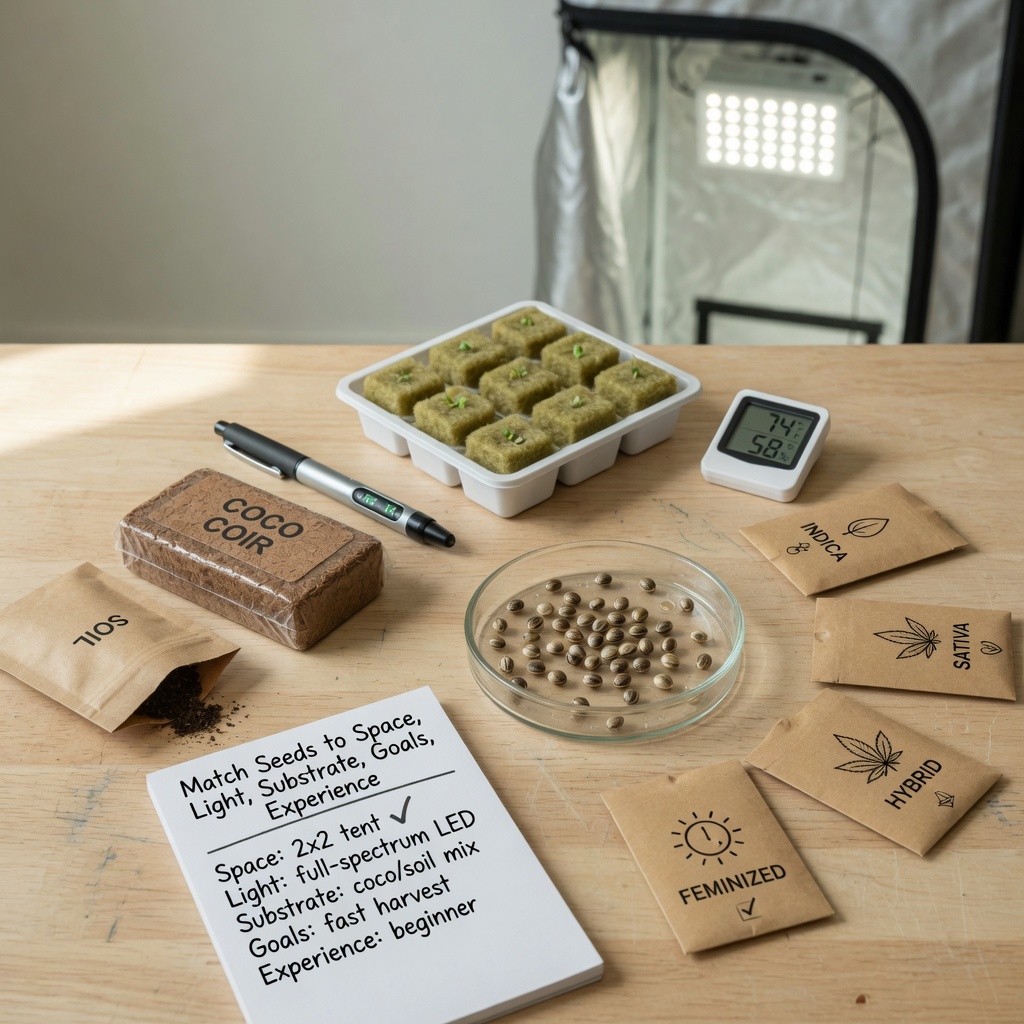
1) Define your grow-space limits: height, footprint, light wattage, and ventilation capacity. 2) Choose seed type (feminized, regular, autoflower) that aligns with your time, skill level, and whether you plan to breed. 3) Review breeder notes and third-party lists like the Our Simple Farm top-five roundup to prioritize sources with consistent indoor feedback.
4) Select a germination method and substrate that match the seed type and your chosen system—soil, coco, or hydroponics—and plan a conservative starter nutrient schedule. 5) Decide on plant training techniques before the first nodes appear so you can choose seeds that tolerate your approach. This checklist reduces trial-and-error and helps prevent the most common beginner mistakes growing cannabis.
Practical next actions for confident seed selection
Before spending on a large pack, buy a few seeds from a reputable source and run a single-cycle trial in your actual grow conditions. Keep notes on germination rates, stretch, leaf health, and response to your nutrient schedule and training; these records make the next seed purchase more predictable. Over time, that disciplined approach to seed selection and small-scale testing builds a reliable library of genetics tailored to your indoor setup and cultivation goals.
Choosing the right seeds is not about finding a mythical “best” strain but matching genetics, seed type, and germination approach to your specific environment and objectives. With careful selection and incremental testing, most growers can move from guesswork to consistent, repeatable results in how to grow cannabis indoors.