
Start by matching light output and spectrum to your intended space
When converting a spare closet or cabinet into a grow box for marijuana, the first decision is the light’s usable output and spectrum relative to canopy area. Rather than guessing wattage, calculate photosynthetic photon flux density (PPFD) targets for the crop and match fixture placement so light is evenly distributed across the canopy. Selecting fixtures with a tight specification for lumen maintenance and spectral output reduces surprises during flowering and vegetative phases.
For small rooms, full-spectrum LEDs typically deliver the best balance of photons per watt and lower radiant heat compared with legacy HID systems. For larger tents or rooms where upfront cost or initial light intensity is prioritized, HPS or MH may still be used, but expect higher heat loads that require larger ventilation and more robust climate control.
Sizing fixtures, layout, and reflectivity for efficient coverage
Determine the canopy square footage you plan to cover and place fixtures to maintain target PPFD without large hotspots. Use center-to-center spacing charts from manufacturers or measure in a grid; overlapping footprints from multiple fixtures often give more uniform coverage than a single large light.
Internal surface reflectivity matters: matte white or Mylar can significantly increase usable light by redirecting stray photons back to leaves. Keep fixtures high enough to spread light but close enough to avoid wasting photons beyond the canopy boundary. Planning the layout up front reduces later energy waste from repositioning or adding unnecessary fixtures.
Managing heat, ventilation, and the grow room microclimate
Lighting choice directly determines the heat load your ventilation must remove. LEDs reduce radiant heat but still add sensible heat into the air; HID systems add both significant radiant and air heat. Size inline fans and exhaust per the expected British thermal unit (BTU) or wattage load to maintain stable temperatures during lights-on and lights-off cycles.
Creating a consistent microclimate for cannabis requires controlling temperature, relative humidity, and air exchange. A small grow box for marijuana needs a fan that exchanges the box volume several times per minute when HIDs are used, and less aggressively with efficient LEDs, but all setups benefit from oscillating fans to prevent boundary-layer stagnation on leaves. Target stable setpoints for day and night; avoiding large swings reduces stress and pest pressure.
Design considerations for hydroponics cannabis systems and irrigation heat
Hydroponics cannabis setups add another thermal and humidity factor: pumps, reservoirs, and lighting all influence the room climate. Place reservoirs away from direct light to avoid algae and moderate water temperature; warmer nutrient solutions can stress roots, so plan for passive or active reservoir cooling if needed.
In closed small rooms, radiant heat from lights can warm nutrient lines and substrates. Route tubing and place pumps where airflow can remove heat without drying media excessively. When integrating hydroponics, account for the extra electrical load of pumps and controllers when calculating circuit capacity and ventilation requirements.
Balancing energy efficiency and light quality using federal guidance
Energy efficiency should be part of lighting decisions; the U.S. Department of Energy provides practical principles on designing lighting systems to reduce energy waste while maintaining performance. Refer to the Energy Saver lighting design guidance for concepts that translate to controlled-environment agriculture, such as using high-efficiency fixtures and managing heat to cut overall energy demand.
Applying those principles means selecting fixtures with high efficacy (photons per watt), considering dimmable drivers for schedule-based control, and integrating timers or controllers to align light use with plant needs. Efficient lighting reduces both electrical draw and the size—and cost—of ventilation and cooling equipment required to maintain a stable microclimate for cannabis.
Control systems, training, and practical layout tips
Automated controllers that modulate light intensity, fan speed, and humidity help maintain consistent conditions across growth stages. Use programmable schedules for vegetative and flowering spectra and reduce cycle deviations by wiring circuits so critical fans and pumps are on backed circuits if available.
Plant training techniques such as low-stress training (LST) and topping spread the canopy to use light more evenly, effectively increasing usable canopy area without adding fixtures. Arrange pots or channels so maintenance access and airflow pathways are unobstructed; cramped layouts increase disease risk and make pest management harder.
Practical checklist for deployment and ongoing maintenance
Before flipping lights, confirm electrical capacity, ventilation effectiveness, and that reflectivity and fixture height produce even PPFD across the canopy. Measure light distribution with a PPFD meter or a reliable light meter if available; correct hotspots and low corners before plants fill the room.
Monitor temperature and relative humidity continuously; small rooms can swing quickly when lights cycle. Log power draw and environmental conditions for several cycles to spot trends and optimize fan curves, light schedules, and reservoir temperatures. Regularly inspect for pests and nutrient imbalances; stable microclimates and proper airflow are your best defenses.
Implementing changes and scaling with energy in mind
When scaling from a single grow box to a multi-tent or room system, prioritize replicable modules: the same light spacing, ventilation per canopy area, and sensor placement. Modular design lets you add or remove units without redesigning circuits or ducting, and it keeps maintenance predictable.
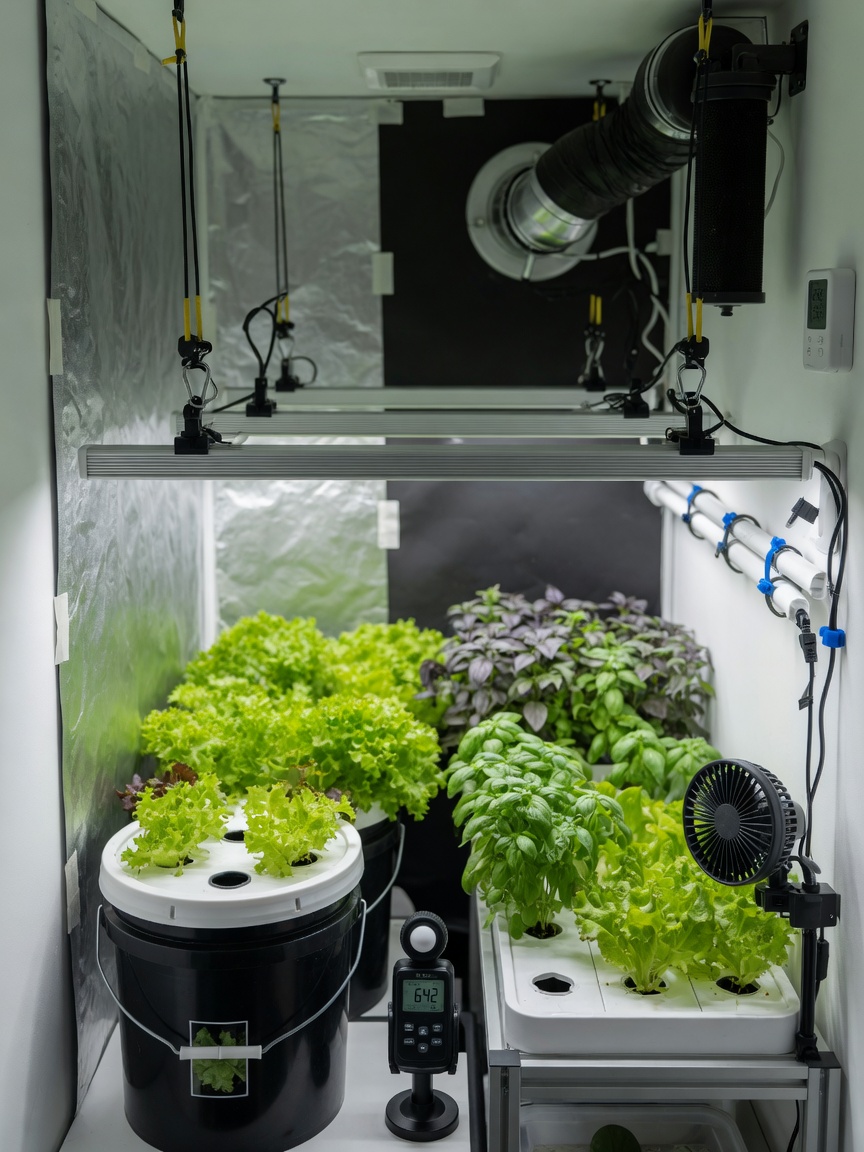
Finally, plan for incremental improvements. Upgrading to higher-efficacy LEDs or adding reflective material can pay dividends in lower cooling loads and electricity costs. Keep decisions data-driven by measuring light, heat, and humidity rather than relying on guesses—this approach yields healthier plants and a more efficient grow room overall.